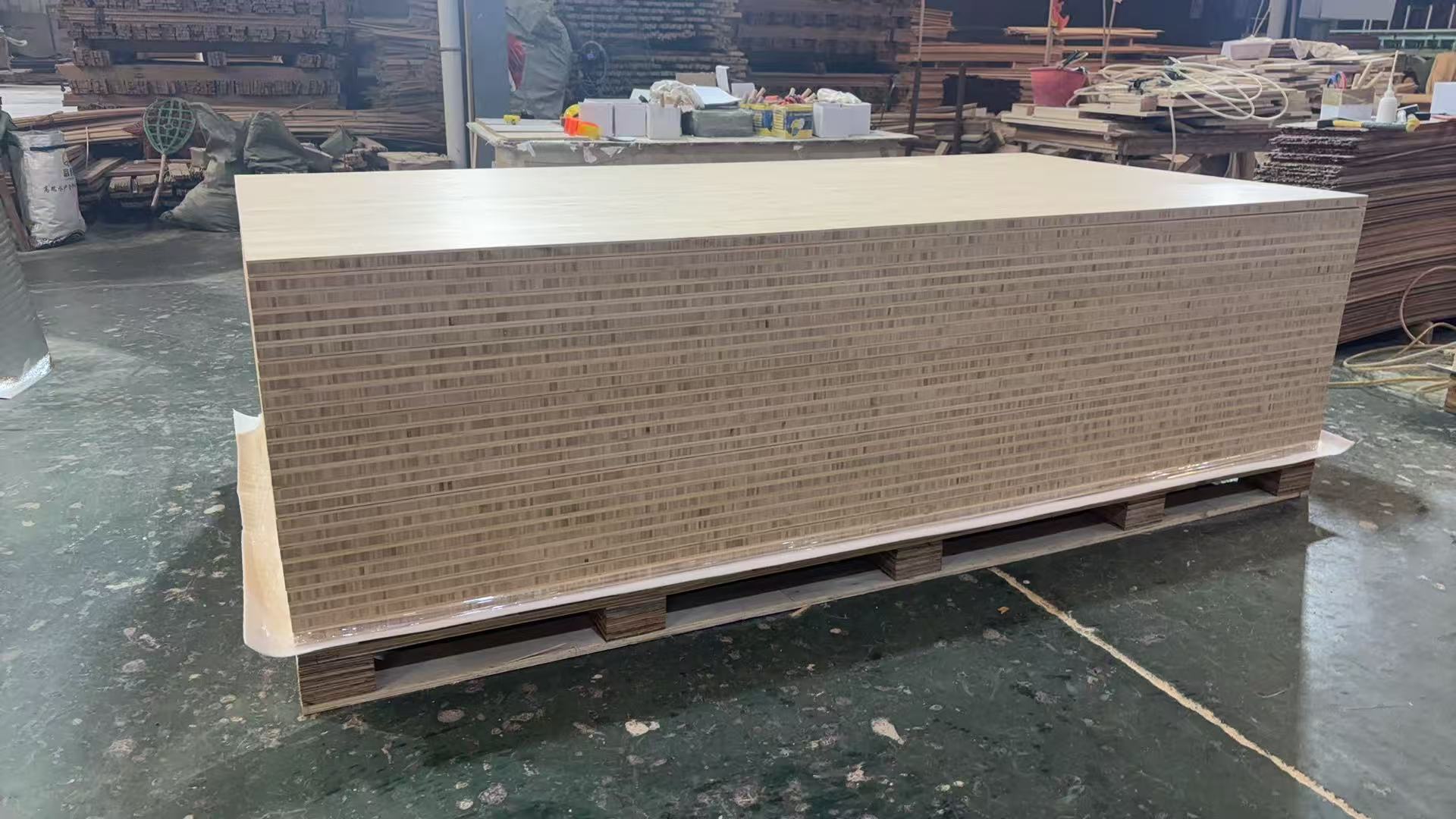
Furniture designers, custom cabinet makers, and commercial woodworkers face a constant challenge in balancing raw material costs, structural reliability, and environmental responsibility. Solid wide-board lumber from old-growth trees has grown increasingly scarce and expensive, while low-grade composite materials like particleboard often fail to deliver the longevity and repairability that customers expect.
Finger joint pine boards offer a practical, high-performance solution that satisfies both modern environmental goals and strict manufacturing standards. By interlocking clean, kiln-dried pieces of sustainable pine timber into wide, straight panels, wood processors create a versatile solid-wood product. Examining manufacturing efficiency, dimensional stability, finishing versatility, and resource stewardship explains why finger joint pine has become a staple material in sustainable furniture production.
Understanding Finger Joint Pine Manufacturing
Evaluating the performance of finger joint pine requires a clear understanding of how these boards are engineered from raw timber.
Traditional solid lumber requires long, defect-free logs to produce wide, straight boards. When mills cut solid timber, natural features like loose knots, resin pockets, pitch streaks, and minor splits force manufacturers to discard significant portions of usable wood.
Finger jointing reclaims high-quality fiber from shorter timber segments. Mills slice away knots and defects from dried pine lumber, leaving short, clear blocks of solid wood. Precision shaping machines cut a series of complementary zig-zag grooves—resembling interlocking fingers—into the ends of these clear wood blocks. High-strength structural adhesives are applied to the joint profiles before hydraulic rams press the ends together under extreme pressure.
Once cured, these endless strips are planed smooth and edge-glued into wide edge-glued panels or cut to specified architectural lengths. The result is a solid wood panel made entirely of natural timber fibers, unified through precision engineering.
Superior Dimensional Stability and Reduced Warping
One of the greatest operational advantages of finger joint pine boards over single-piece solid timber is their resistance to environmental movement.
Mitigating Internal Grain Tension
Single-piece solid wood boards contain continuous grain lines running along their entire length. As ambient temperature and relative humidity shift throughout seasonal changes, internal forces across these continuous grain lines cause raw boards to cup, twist, bow, or crook.
Finger joint boards disrupt these continuous internal stress lines. Because each board comprises multiple shorter blocks of pine glued end-to-end and edge-to-edge, the grain directions of adjacent segments counteract one another. When moisture levels shift, the localized tensions cancel out across the panel, keeping the board flatter and straighter than solid timber.
Elimination of Internal Defects
Knots in solid timber act as focal points for structural failure and uneven moisture movement. Over time, loose knots can fall out, leaving empty holes in finished furniture, or sap can bleed through paint layers.
Because the finger joint manufacturing process removes knots and pitch pockets before assembly, the resulting panel features uniform density throughout. Furniture makers eliminate the waste associated with cutting around bad knots on the workshop floor, saving time and reducing raw material loss.
Environmental Sustainability and Resource Efficiency
Sustainable forestry practices depend on maximizing the usable yield from every harvested tree while reducing reliance on ancient or slow-growing forest ecosystems.
Maximizing Yield from Harvested Logs
Conventional lumber milling leaves up to forty percent of harvested log volume behind as low-value trim waste, offcuts, or sawdust. Finger jointing recovers short, clean timber pieces that would otherwise end up in incinerators or landfills. Converting short timber remnants into high-grade structural furniture boards increases overall timber yield per tree significantly.
Utilizing Fast-Growing Plantation Species
Pine species such as Radiata, Taeda, and Scots pine grow rapidly in managed commercial plantations. These managed forests absorb carbon dioxide rapidly during active growth phases and mature within fifteen to twenty-five years, compared to centuries for traditional hardwoods.
By substituting finger joint plantation pine for slow-growing, vulnerable hardwood species, furniture manufacturers relieve commercial logging pressure on old-growth natural forests while maintaining authentic solid-wood construction.
Non-Toxic Adhesives and Recyclability
Modern finger joint panel producers utilize low-emission, water-resistant polyurethane or polyvinyl acetate (PVA) adhesives that comply with strict indoor air quality standards. Unlike synthetic composite materials like medium-density fiberboard (MDF) or particleboard, which often rely on urea-formaldehyde resins, quality finger joint pine panels maintain healthy indoor air quality.
Furthermore, because finger joint pine consists of natural wood fibers rather than compressed dust and synthetic binders, offcuts can be safely recycled, composted, or used for clean thermal energy generation at the end of their service life.
Workability for Furniture Craftsmen and Manufacturers
From bespoke artisan workshops to automated production facilities, finger joint pine adapts seamlessly to standard woodworking operations.
Clean Machining and Tool Longevity
Pine is naturally soft to medium in density, making it easy on cutting blades, router bits, and shaper tooling. Clean finger joint pine lacks hard knots, preventing sudden blade kickback and reducing wear on expensive carbide cutting tips.
-
Routing and Edge Profiling: Woodworkers can cut crisp edge profiles, bevels, and decorative moldings without fear of tear-out around knot clusters.
-
Joinery Integration: Finger joint boards accept traditional furniture joinery—such as mortise-and-tenon, dowels, pocket screws, and dovetails—with clean precision and high mechanical strength.
-
Sanding Efficiency: The uniform density of knot-free finger joint panels allows wide-belt sanders to create an even, silky-smooth surface across the entire board width without leaving high or low spots around dense knot rings.
Fastener Retention and Structural Integrity
The structural adhesives used in modern finger jointing create a bond line stronger than the surrounding natural wood fibers. Laboratory shear testing consistently shows that under extreme load, the wood fibers fail before the glued finger joint separates.
Wood screws, brad nails, and corner brackets drive smoothly into finger joint pine, holding firm without splitting board ends. This reliable holding capacity is essential for structural furniture components like drawer boxes, bed frames, cabinet carcasses, and dining table aprons.
Surface Finishing and Aesthetic Versatility
Creating eye-catching commercial furniture requires materials that accept diverse finishing techniques, from crisp painted coats to warm, transparent stains.
Ideal Base for Painted Finishes
Smooth, knot-free finger joint pine provides an outstanding substrate for high-grade painted furniture, built-in cabinetry, and architectural shelving.
On standard solid pine, natural oils and tannins in knots bleed through paint layers over time, creating unsightly yellow spots on white or light-colored finishes. Because finger joint pine removes these resinous knots, primer and paint adhere evenly without risk of knot-bleed, yielding a flawless, factory-smooth painted appearance.
Staining and Natural Wood Grains
For designs celebrating natural wood aesthetics, clear-grade finger joint boards display a subtle, rhythmic mosaic of genuine pine grain patterns. When finished with clear oils, waxes, or transparent stains, the interlocking finger profiles add a unique structural detail that highlights precision craftsmanship.
Applying a pre-stain wood conditioner ensures that the varied grain directions across different finger joint blocks absorb stain pigment uniformly, avoiding blotchy patches.
Key Applications in Modern Furniture Design
The structural stability and clean surface of finger joint pine make it suitable for a broad spectrum of interior applications:
-
Custom Shelving and Bookcases: Long finger joint boards resist sagging under heavy book loads while staying flat across wide spans, making them preferred choices for library shelving and pantry storage.
-
Cabinet Carcasses and Drawer Sides: Dimensional stability prevents cabinet doors from binding and ensures drawers slide smoothly without binding during seasonal weather shifts.
-
Dining Tables and Desk Tops: Edge-glued finger joint pine panels provide wide, flat, solid-wood working surfaces that accept daily utility while showcasing authentic timber texture.
-
Children’s Furniture and Nursery Pieces: Low VOC emissions, soft rounded edges, and non-toxic paint compatibility make finger joint pine an ideal natural material for cribs, bunk beds, and toy chests.
-
Architectural Trim and Wall Paneling: Beyond standalone furniture, finger joint pine boards excel as durable interior wainscoting, window sills, and ceiling accent beams.
Best Practices for Handling and Storage
To preserve board quality prior to assembly, woodworkers should follow standard material handling guidelines:
-
Acclimate Materials: Allow finger joint pine boards to rest inside the climate-controlled workshop for forty-eight to seventy-two hours prior to cutting, allowing moisture levels to balance with ambient room air.
-
Store Flat: Keep un-assembled panels stacked horizontally on level supports elevated off concrete floors to prevent moisture absorption from beneath.
-
Seal All Edges: Apply consistent finish coats or sealers to both top and bottom surfaces, as well as end grain, to maintain balanced moisture exchange across the entire board.
Summary
Designing sustainable, high-quality furniture requires raw materials that balance environmental responsibility with long-term structural performance. Finger joint pine boards meet these demands by transforming fast-growing, renewable plantation timber into flat, dimensionally stable, knot-free solid wood panels.
By eliminating warping, preventing knot-bleed, maximizing timber utilization, and offering effortless workability, finger joint pine gives furniture makers a dependable, solid-wood foundation for beautiful, long-lasting products.