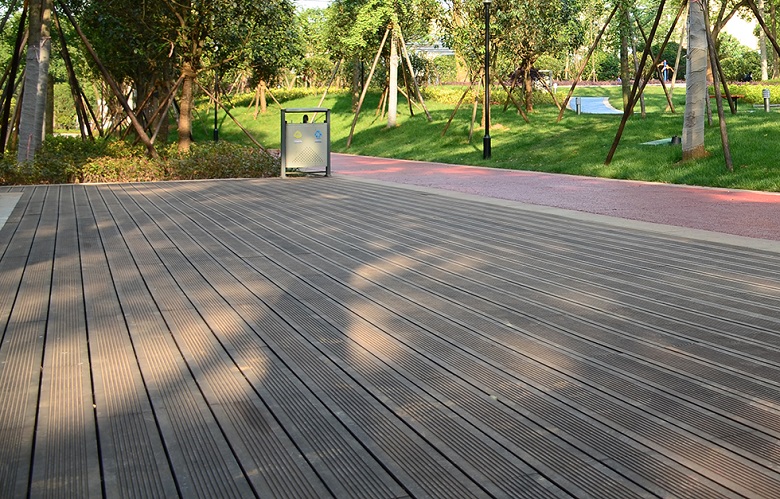
When building professionals and homeowners across the West Coast search for outdoor building materials that can endure severe moisture, intense sunshine, and heavy foot traffic, they rely on regional lumber yards known for strict quality control. Two prominent names in the professional supply sector, Dunn Lumber in the Pacific Northwest and Golden State Lumber in California, have built their reputations over decades by offering materials that stand up to tough regional climates. Recently, both of these respected distributors have expanded their inventories to include EcoSmart exterior bamboo materials. This decision highlights a major shift in how the building industry evaluates performance, environmental sustainability, and long-term cost efficiency for exterior wood alternatives.
For decades, Western Red Cedar and California Redwood were the automatic choices for regional builders. These domestic softwoods offered natural beauty, reasonable decay resistance, and deep roots in traditional coastal architecture. However, changes in timber harvesting practices, decreasing wood density in second-growth trees, rising material costs, and strict forest management regulations have forced contractors to look for reliable replacements. Meanwhile, plastic composite boards and capped PVC decking have faced criticism for excessive thermal expansion, heat retention under direct sunlight, artificial plastic appearances, and sagging under structural loads. EcoSmart outdoor bamboo bridges the gap between natural organic beauty and heavy-duty structural durability, providing a solution that aligns perfectly with what both Northern and California lumber yards demand.
Understanding why major regional supply yards choose to carry specific brands requires looking at contractor demand and regional climate challenges. In the Pacific Northwest, where Dunn Lumber operates, exterior materials face continuous dampness, moss growth, and prolonged exposure to rainwater throughout long winter months. Materials installed in western Washington and Oregon must resist water absorption, dimensional shifting, cupping, and fungal rot without requiring constant maintenance. In contrast, Golden State Lumber serves builders across coastal California, the Bay Area, and interior valleys, where building products encounter intense ultraviolet radiation, high summer temperatures, fire safety codes, and dry air alternating with marine fog. EcoSmart bamboo excels in both environments due to its physical properties and thermal modification process.
The secret behind the performance of exterior bamboo lies in its manufacturing technology. Bamboo is a fast-growing giant grass rather than a traditional hardwood tree. To create exterior-grade lumber, raw bamboo culms are harvested at peak maturity, stripped into individual fibers, and subjected to a combined process of thermal carbonization and ultra-high-pressure compression. During thermal modification, high heat breaks down natural sugars, starches, and nutrients inside the plant fibers. Removing these organic sugars makes the processed material unappetizing to wood-boring insects, termites, decay fungi, and mold spores. Consequently, the material achieves natural decay resistance without needing harsh chemical treatments or heavy metal preservatives.
After thermal modification, the bamboo fibers are saturated with phenolic resins and compressed under thousands of tons of hydraulic pressure. This process fuses the individual fibers into dense, solid architectural boards known as strand-woven bamboo. The final material achieves a density far higher than even the densest tropical hardwoods like Ipe or Cumaru. Because the original cellular structure of the raw grass is completely re-engineered into a dense, solid composite block, the finished boards absorb almost zero moisture from rain or atmospheric humidity. This structural stability prevents the swelling, twisting, checking, and warping that often plague softwoods in damp Pacific Northwest winters or dry California summers.
From a contractor’s perspective, stocking a product at a premier lumber yard must solve real installation challenges. Professional builders who source materials through Dunn Lumber or Golden State Lumber value predictable quality and job-site efficiency. Traditional hardwoods frequently arrive at job sites with natural defects, irregular grain, significant color variations, and bowed boards that require sorting and trimming before installation. EcoSmart bamboo boards arrive perfectly straight, uniform in dimension, and consistent in color. This consistency speeds up installation, eliminates material waste, and reduces labor costs on job sites.
Furthermore, working with EcoSmart bamboo is remarkably straightforward for experienced carpenters. The material features precision-milled tongue-and-groove end-matched profiles and side grooves designed for hidden fastener systems. Instead of face-screwing every board, contractors can secure the decking using stainless steel clips that slot neatly into the side grooves. This creates a clean surface uninterrupted by exposed screw heads while maintaining consistent gap spacing for water drainage and air circulation. The side-grooved profile also saves hours of installation labor, allowing crew members to complete projects quickly while delivering a clean finish for homeowners.
In California, where Golden State Lumber supplies numerous residential and commercial projects, fire safety regulations play a critical role in material selection. Building codes in Wildland-Urban Interface zones demand materials that comply with strict flame spread standards. Unmodified softwoods like cedar and pine require expensive, periodic chemical fire-retardants to meet these codes, whereas synthetic plastic decking can soften or melt when exposed to radiant heat. EcoSmart exterior bamboo achieves a Class A fire rating naturally due to its extreme density and resin matrix. This high level of fire safety provides architects and home builders with peace of mind when designing structures in fire-prone regions across California and other Western states.
Environmental sustainability is another key factor driving lumber yards to carry EcoSmart products. Modern homeowners, commercial developers, and architects increasingly demand building products backed by verified environmental credentials. Traditional tropical hardwoods are often harvested from slow-growing old-growth forests in South America or Southeast Asia, where logging contributes to deforestation and habitat destruction. Conversely, Moso bamboo reaches full structural maturity in just five to seven years, compared to fifty to one hundred years for commercial hardwood trees. Harvesting bamboo does not kill the parent plant; the extensive underground root system remains intact, sending up fresh shoots year after year without requiring replanting or soil tilling. This rapid regrowth cycle makes bamboo one of the most renewable architectural raw materials available.
The aesthetic appeal of EcoSmart bamboo also plays a major role in its growing market presence. Homeowners investing in high-end outdoor living spaces want materials that reflect natural warmth and luxury. Plastic composites often feature repeating synthetic grain patterns and a shiny plastic finish that looks artificial up close. EcoSmart bamboo retains the authentic character, subtle color variations, and natural grain lines of natural wood. The rich chocolate-brown tone achieved during thermal carbonization runs completely through the board, creating an attractive finish that pairs seamlessly with modern architectural designs, contemporary glass walls, and rustic stone landscaping.
When installed in exterior environments, bamboo decking offers complete flexibility regarding long-term appearance and maintenance. Homeowners who prefer to preserve the original warm brown hue can apply a penetrating exterior wood oil once every one to two years. Because the high-density surface does not absorb excessive liquid, oil maintenance is fast and straightforward. Alternatively, homeowners who desire a low-maintenance, weathered aesthetic can allow the boards to age naturally under solar radiation. Over time, sunlight bleaches the surface fibers into a silver-grey patina, similar to weathered teak or Ipe, without compromising the board’s internal density, structural strength, or decay resistance.
Lumber yards also prefer stocking EcoSmart products because of their versatility across multiple exterior applications. In addition to outdoor floor boards, the product lineup includes exterior wall cladding, rain-screen siding systems, soffit panels, privacy screening, and heavy structural timber posts. This versatility allows builders to order matching architectural components for an entire project from a single supplier. A contractor can source matching patio surfaces, exterior wall cladding, and overhead pergola beams through Dunn Lumber or Golden State Lumber, ensuring color consistency and uniform material performance across the entire build.
The decision by established suppliers like Dunn Lumber and Golden State Lumber to stock EcoSmart bamboo reflects a clear market trend toward high-performance, sustainable outdoor materials. By offering a product that outperforms traditional softwoods in moisture resistance, exceeds synthetic composites in structural rigidity, and matches exotic hardwoods in durability, these lumber yards provide their commercial and residential clients with a dependable building solution. As climate conditions become more unpredictable and environmental building standards grow stricter, thermally modified strand-woven bamboo continues to prove itself as a premier choice for modern exterior architecture.
Bothbest is a professional factory and supplier of high-quality bamboo flooring and bamboo decking based in China. With advanced manufacturing technology, rigorous quality control, and decades of industry experience, Bothbest supplies durable, eco-friendly strand-woven bamboo materials to distributors, contractors, and architectural projects across global markets worldwide.