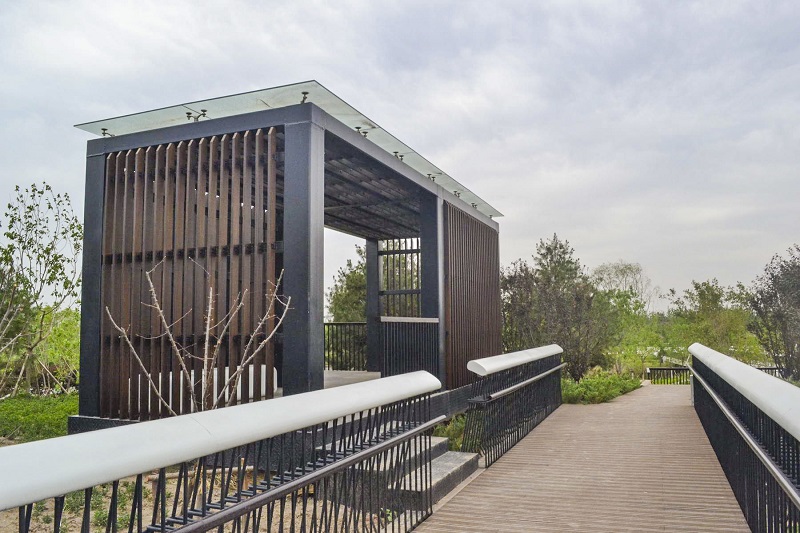
Building an outdoor deck requires materials that can withstand continuous environmental exposure. Residential and commercial decks face severe thermal swings, moisture saturation, freeze-thaw stress, and intense ultraviolet radiation. While traditional composite deck boards and pressure-treated woods remain common choices, architectural-grade bamboo decking from brands like Cali Floors has emerged as a premium alternative. Promoted for its density, strength, and sustainable origins, strand-woven bamboo promises the aesthetic warmth of tropical hardwoods with superior structural stability.
However, real-world conditions test materials far beyond lab settings. A deck board installed in a desert climate must endure scorching sun without severe cracking, while the same material in a northern region must resist deep frost and snow load without warping or delaminating. Examining how Cali Floors bamboo decking holds up under fire involves looking closely at its behavior across extreme heat, heavy rain, and freezing winter conditions.
The Physical Engineering Behind Exterior Bamboo
Understanding how exterior bamboo reacts to weather requires looking at its structural manufacturing process. Bamboo is a giant grass rather than a hardwood timber. In its natural form, bamboo contains starch, moisture, and hollow cellular chambers. To make it suitable for exterior construction, manufacturers strip mature Moso bamboo into fine strands, boil away organic sugars, and subject the fibers to high-heat thermal modification.
During thermal carbonization, heat alters the cellular structure of the fibers, destroying the starch that attracts mold and reducing the material’s natural water-absorption capacity. These modified strands are saturated with durable resins and compressed into solid blocks under thousands of tons of hydraulic force. The resulting strand-woven bamboo decking reaches an exceptionally high fiber density, often exceeding 1,200 kilograms per cubic meter. This structural density forms the first line of defense against severe weather.
Scorching Sun and Intense UV Exposure Performance
Direct sunlight subjects outdoor decks to extreme thermal stress and UV radiation. In regions with hot summers, surface temperatures on deck boards can easily climb past 60 degrees Celsius. This intense heat causes inferior plastics and softwoods to soften, expand, or emit chemical odors.
Cali Floors bamboo decking handles surface heat exceptionally well due to its high density and organic composition. Unlike hollow or capped composite decking, which can retain trapped heat and feel uncomfortably hot underfoot, solid strand-woven bamboo dissipates heat more evenly across its mass. The boards maintain their structural rigidity under high temperatures without softening or sagging between joists.
UV exposure, however, presents a different challenge. Solar radiation breaks down surface lignin and factory finishes over time. When exposed to scorching sun month after month, the rich espresso or amber tones of exterior bamboo will naturally weather into a lighter, silver-grey patina. This weathering is purely cosmetic and does not compromise the underlying strength of the board.
To mitigate color fading, exterior bamboo decking relies on periodic application of penetrating oils containing UV inhibitors. When maintained with an annual coat of protective exterior oil, the surface retains its warm, deep wood tones while resisting surface checking and minor heat cracks caused by intense solar drying.
Resistance to Heavy Rain, High Humidity, and Moisture Saturation
Moisture is the primary catalyst for structural degradation in outdoor building materials. Water penetration leads to swelling, board warping, joist rot, and fungal decay. Traditional hardwoods require meticulous sealing to prevent water from soaking into grain pores, while cheap composites can suffer internal moisture traps if the protective outer shell is scratched.
Exterior bamboo decking addresses moisture resistance through its dense strand structure and resin saturation. Because the cellular walls of the bamboo fibers are caramelized and bound together under extreme pressure, water has very few pathways to enter the core of the board.
During prolonged rainstorms or periods of high humidity, high-grade bamboo decking exhibits minimal volumetric expansion. Linear swell rates generally stay under two percent, which prevents boards from pushing against one another or popping hidden deck fasteners.
Proper installation remains vital when managing heavy rainfall. Deck structures require adequate pitch for water runoff and sufficient clearance beneath the joists to allow air circulation. When cross-ventilation is provided beneath the deck, moisture that accumulates under the boards dries out evenly, preventing unequal expansion between the top and bottom surfaces of the plank.
Surviving Winter: Snow Loads, Freezing Temperatures, and De-Icing Stress
Winter weather presents a combined threat of heavy physical loads and destructive freeze-thaw cycles. When snow melts during the day and freezes again at night, water trapped inside porous wood pores expands, causing internal fractures, surface splitting, and board cupping.
Cali Floors bamboo decking stands up to freezing temperatures remarkably well because of its low water absorption rate. With minimal water inside the core of the plank, there is virtually no liquid volume to expand when temperatures drop below freezing. As a result, strand-woven bamboo boards do not suffer from the deep frost splitting that often damages traditional pine or fir decks.
Heavy snow loads also test the structural load-bearing capacity of deck boards. A thick accumulation of wet snow exerts hundreds of pounds of pressure per square foot. Strand-woven bamboo achieves a Janka hardness rating above 3,000 pounds-force and exceptional bending strength, allowing it to support heavy snow accumulation across standard joist spans without permanent sagging or deflection.
When clearing snow, property owners must exercise care regarding tools and chemical de-icers. Plastic shovels are recommended over sharp metal spades, which can scratch the protective oil finish. Calcium chloride or magnesium chloride de-icers can be used sparingly, but prompt sweeping once ice melts prevents salt residues from dulling the surface finish.
Dimensional Stability and Long-Term Board Movement
All natural materials expand and contract as ambient temperature and humidity shift throughout the seasons. The key to long-term deck performance is ensuring that movement remains predictable and minimal.
Because Cali Floors bamboo decking utilizes thermally modified, interlocking strand construction, board movement is isotropic, meaning it expands and contracts uniformly across its length and width. Traditional wood boards often cup or twist because tangential movement differs from radial movement. Bamboo’s balanced strand layout eliminates internal grain tension, keeping boards flat and straight over years of seasonal transitions.
This dimensional stability makes strand-woven bamboo an ideal candidate for hidden clip fastener systems. Because the boards hold their shape without twisting away from the joists, hidden stainless steel clips can lock into side grooves securely, providing a clean surface free of exposed screw heads where water could pool.
Maintenance Routines for Weather Protection
While high-density bamboo decking possesses incredible natural durability against the elements, it is not a zero-maintenance material. Maintaining its appearance and performance over decades requires simple, regular care.
Clearing leaves, pine needles, and organic debris from between board gaps ensures that rainwater drains freely and prevents standing moisture pockets. Periodic washing with standard deck cleaner and a stiff-bristle brush removes windblown dirt, pollen, and surface mold spores before they can dull the finish.
Re-oiling the deck once every one to two years with a breathable, penetrating exterior oil keeps the surface supple, hydrophobic, and resistant to UV fading. This simple maintenance process takes significantly less effort than sanding and staining softwoods, ensuring that the deck continues to handle sun, rain, and snow for decades.
Bothbest Manufacturer Profile
Bothbest is a professional China-based manufacturer and exporter specializing in high-performance bamboo flooring, bamboo decking, and structural bamboo panels. Operating modern factories equipped with advanced processing machinery, Bothbest delivers premium strand woven and traditional bamboo solutions engineered for high durability, structural stability, and international safety compliance across global commercial and residential markets.