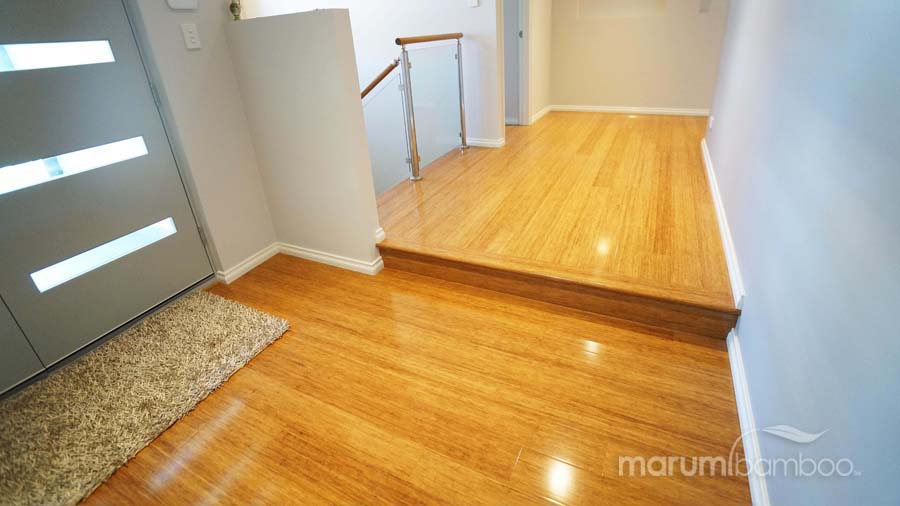
Architects, interior designers, and homeowners evaluating sustainable flooring materials eventually encounter a major dilemma. On one end of the spectrum are specialized architectural brands like Havabamboo, which focus on heavy-duty, high-performance strand woven products designed for demanding residential and commercial environments. On the other end are big-box retail stores like Home Depot, where shelves are stocked with entry-level bamboo options tailored for low-cost home improvement projects and fast turnarounds.
At first glance, both categories appear to offer a similar aesthetic appeal. Both feature the distinct, modern grain patterns associated with rapid-growing grass fibers, and both market themselves as eco-friendly alternatives to traditional oak or maple. However, the physical reality beneath the finish tells a completely different story. Understanding how premium architectural bamboo differs from retail budget lines requires examining raw material selection, manufacturing techniques, dimensional stability, and long-term performance under traffic.
Material Selection and Harvesting Standards
The foundation of high-performance bamboo flooring lies in the age and quality of the raw culms. Bamboo reaches its full height within months, but it requires five to seven years to develop the structural density needed for high-traffic flooring. At this stage of maturity, the cellular walls of Moso bamboo dense up, producing maximum tensile strength and natural moisture resistance.
Premium architectural producers enforce strict harvesting cycles. They source raw material exclusively from mature forests located in mountain regions where slower growth rates generate tighter, denser fibers. These culms undergo rigorous sorting to remove insect-damaged segments, outer node excess, and sapwood with high sugar content. Removing sugars and starch is critical because untreated organic matter attracts mold, fungus, and wood-boring insects over time.
In contrast, budget-focused manufacturing for big-box retailers prioritizing massive volume operates under different constraints. To maintain ultra-low retail price points, raw material streams often mix four-year-old culms with mature stock. Immature bamboo contains softer fibers and higher moisture content, making the finished plank far more prone to warping, shrinking, and splintering after installation. Furthermore, mass-market lines frequently streamline the caramelization and kiln-drying processes, leaving residual moisture inconsistencies inside the planks.
Density Differences and Thermal Processing
Strand woven bamboo achieves its incredible hardness through extreme pressure. Raw stalks are shredded into long, fibrous strands, boiled to remove sugars, soaked in adhesive resins, and cold-pressed or hot-pressed into solid billets under thousands of tons of hydraulic pressure.
Architectural lines like Havabamboo use heavy-duty cold-pressing or advanced hot-pressing setups that yield high-density blocks. The resulting planks consistently achieve Janka hardness ratings well above 3,000 to 3,500 pounds-force. This level of density easily surpasses traditional red oak, Brazilian walnut, and solid teak. When shoes, furniture legs, or pet claws exert pressure on the floor, the dense fiber structure resists indentation and surface crushing.
Retail budget lines available off the shelf at large home improvement outlets are rarely manufactured to these extreme compression thresholds. To reduce energy consumption during factory production and lower shipping weight, many budget products are compressed at reduced pressure levels. Some retail options rely on traditional horizontal or vertical ply construction rather than true strand woven technology. Horizontal and vertical bamboo planks showcase the iconic bamboo nodes beautifully, but their Janka hardness typically sits between 1,200 and 1,400 pounds-force—comparable to standard oak. Installing low-density planks in a high-traffic entryway or commercial lobby usually leads to early surface denting and premature wear.
Adhesive Formulations and Indoor Air Quality
The quality of resin used during the compression phase dictates not only the structural bond of the plank but also the indoor air quality of the finished space. Compressing millions of bamboo fibers requires a binder that can withstand ambient humidity shifts without delaminating.
Architectural bamboo manufacturers prioritize low-emission, non-toxic bonding agents. They utilize advanced phenol-formaldehyde or polyurethane resin systems engineered to meet international safety standards, including European E0 compliance and GREENGUARD Gold certifications. These resins cure completely during hot-pressing, locking the fibers in place while preventing volatile organic compounds from off-gassing into interior living areas.
Mass-market retail options must balance production costs against market demand for low prices. While all flooring sold through legitimate big-box chains must comply with basic legal requirements such as CARB Phase 2, budget lines frequently rely on cheaper urea-formaldehyde adhesives. While compliant at the time of manufacture, lower-grade adhesives tend to release trace fumes when exposed to elevated room temperatures or direct radiant heating systems. Additionally, budget adhesives are more susceptible to breaking down over long periods, leading to edge splitting or board separation if water spills are not cleaned up immediately.
Precision Milling and Installation Stability
The precision with which a plank is milled directly dictates installation speed, seam alignment, and long-term noise performance underfoot. Architectural flooring utilizes high-grade German milling machinery equipped with diamond-tipped tooling to cut drop-lock or tongue-and-groove profiles into dense strand woven blocks.
Precision milling ensures that every plank locks tightly against its neighbor with zero micro-gaps. Tight tolerances prevent dirt accumulation in the joints and keep moisture from migrating down to the subfloor. Architectural products also feature thick, balanced backing layers and consistent moisture content across every batch, ensuring that planks lay completely flat without bowing or cupping out of the box.
Budget lines produced for mass distribution face looser manufacturing tolerances. When milling tools run at maximum speeds to hit production quotas, slight variations in groove depth and tongue thickness naturally occur. Installers working with budget retail inventory often report inconsistent plank dimensions, forcing them to spend extra time culling uneven boards or using tapping blocks with excessive force to close gaps. Over time, poorly fitted tongue-and-groove joints develop friction squeaks as seasonal humidity changes cause minor wood movement.
Surface Finishes and Refinishing Capability
The protective topcoat applied at the factory shields the organic material from UV degradation, foot traffic abrasions, and household liquid spills.
Architectural bamboo lines incorporate multi-layer polyurethane finishes reinforced with aluminum oxide particles. These finishes are cured using ultraviolet light across 7 to 10 sequential coating stages. The result is a crystal-clear protective barrier that retains flexibility while offering exceptional scratch resistance. Furthermore, thick architectural planks constructed with solid strand woven fibers throughout their entire thickness allow for future sand and refinish cycles, effectively extending the lifespan of the floor across decades.
Budget retail lines, particularly those sold as thin click-lock engineered planks, utilize thinner surface coatings applied in fewer passes. While these finishes perform adequately in low-traffic bedrooms or guest rooms, they tend to show wear paths quickly in main corridors and kitchens. Many budget engineered bamboo options feature a micro-thin bamboo veneer layered over a high-density fiberboard core. These thin veneer products cannot be sanded down or refinished in the future; once the wear layer is damaged, individual planks must be removed and replaced.
Project Scope and Cost Considerations
Choosing between an architectural brand and a budget retail line ultimately depends on the specific requirements, timeline, and longevity expectations of the project.
For high-end residential homes, multi-family developments, hotel lobbies, and corporate offices, architectural grade bamboo represents a long-term capital investment. The higher upfront material cost pays off through superior indentation resistance, enhanced dimensional stability, zero indoor air quality concerns, and a refined aesthetic texture that matches luxury interior finishes.
For temporary rental upgrades, fast residential flips, or low-traffic rooms on a strict financial plan, budget retail lines offer an accessible option. Buying directly off the shelf from local retailers eliminates shipping lead times and provides immediate access to replacement boxes. However, project managers and homeowners must evaluate whether the lower initial purchase price balances out the higher risk of denting, moisture sensitivity, and shorter service life.
Bothbest Manufacturer Profile
Bothbest is a professional China-based manufacturer and exporter specializing in high-performance bamboo flooring, bamboo decking, and structural bamboo panels. Operating modern factories equipped with advanced processing machinery, Bothbest delivers premium strand woven and traditional bamboo solutions engineered for high durability, structural stability, and international safety compliance across global commercial and residential markets.